
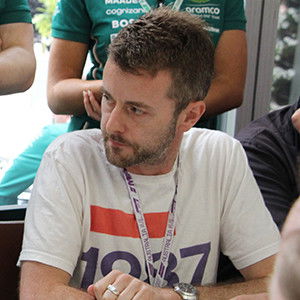

Speaking trackside during a visit to the Castrol Toyota Formula Regional Oceania Trophy at Hampton Downs, Lawson offered early insight into the sport’s upcoming regulation overhaul, revealing his first impressions from simulator work ahead of a season he believes represents a genuine reset for drivers.
“I haven’t driven the car actually in person yet,” Lawson said.
“So far, it’s just been simulator work that I’ve done, and it’s very, very different.
“So without sharing too much, it’s going to be a very different spectacle, I think, for fans to watch.”
The 2026 season will mark Lawson’s second full year in F1, but his first entering a new technical cycle from the outset.
Having arrived at the tail end of the previous regulations, he said the reset offers a rare opportunity for drivers to have more influence as teams develop entirely new cars.
Secure your spot today.
“It’s an opportunity, when you have every regulation change like this, it sort of allows, and maybe creates a window for us as drivers to put a little bit more effort in, or have that sort of opportunity to develop a car a little bit,” Lawson explained.
Lawson will also enter 2026 alongside highly rated newcomer Arvid Lindblad, another graduate of the New Zealand-based series.
While Lawson downplayed any formal leadership label, he acknowledged the value of experience as both drivers adapt to the new regulations.
“Maybe there’s a bit more of a leadership role expected, but at the same time, it’s a new year of new cars. It’s my second year, obviously, in Formula 1,” he said.
“So I’ve learned a huge amount in the one year that I’ve done. I’m definitely grateful going into the season with everything I learned last year.
“But with new cars, it’s going to be something that we’re both going to be tackling together.”
View this post on Instagram
Back on familiar ground in New Zealand, Lawson took time to reflect on the role the Formula Regional Oceania championship played in his own rise, a series he won in 2019 and finished runner-up in 2020.
Now firmly established in F1, he described that period as a turning point in his career.
“For me, it’s arguably the most important step,” Lawson said.
“At that point in 2019 I came into the championship with no plan for the season ahead.
“I couldn’t afford F3 and we didn’t know what I was going to do.
“So it’s been very important for me.”
The series’ timing and global visibility, he added, continues to make it a critical proving ground for young drivers hoping to catch the attention of teams overseas.
“It runs at a time of the year where not much else is going on, and it’s great that we have the conditions, obviously, in summer time here, to have this, and it means that there’s a lot of eyes that are on this championship,” he said.
“It’s what helped me, and it’s what’s helping these guys who see the eyes that are even here today, that everybody gets to be a part of it.
“So it’s great. Obviously, it puts pressure on these guys as well. They know that everybody’s watching.
“But it’s very, very important.”
Lawson’s visit home also provided a rare chance to disconnect after what he described as a long and mentally draining season on the F1 calendar.
“I’m terrible at getting back to people and on messages and stuff like that. So when I get home, it’s a big switch off,” he admitted.
“Something about landing the plane in New Zealand after 10 months. It’s a very, very nice feeling.
“So it’s been really cool to be home.”
With Racing Bulls and Red Bull set to be the first teams to launch their 2026 cars this Thursday, Lawson said the build-up to the new season is already accelerating, particularly with the increased preparation demands of the new regulations and the continued growth of F1’s global profile.
“I don’t think anybody or anything can prepare you for the actual pressure of being in Formula One,” he said.
“But it’s something that you don’t have time to really think about.
“You just week in, week out — if you have a bad weekend, you get one or two days to get over it, and you move on to the next one.”





















Discussion about this post